


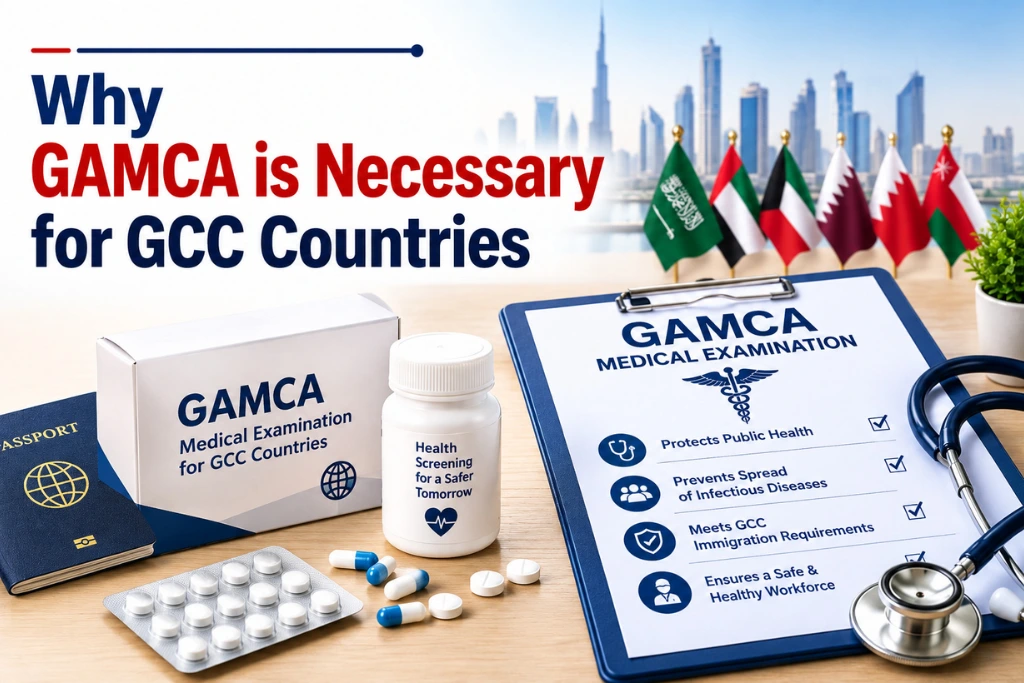
Every worker heading to a Gulf country for a job has to clear one thing first – a medical screening that checks for infectious diseases before the visa gets approved. That, in short, is why GAMCA is necessary for GCC countries. Without it, Gulf nations would have no consistent way to check the health of the millions of workers arriving each year from countries like India.
This blog looks at why GAMCA is necessary for GCC countries and how it works in practice for someone applying through GAMCA Medical for Bahrain.
What Does GAMCA Actually Do for GCC Countries?
GAMCA runs standardised medical centres that test workers for infectious and chronic conditions before a Gulf work visa gets finalised.
The organisation – Gulf Approved Medical Centres Association – came about because the six Gulf countries needed one shared system instead of each running its own separate checks. This is really at the heart of why GAMCA is necessary for GCC countries: it keeps things uniform, whether someone is headed to Saudi Arabia, UAE, or a smaller destination like Bahrain.
Take a candidate applying for work in Bahrain. They go through GAMCA Medical for Bahrain, which sticks to GAMCA’s core framework but adds a few local requirements on top.
Why Is GAMCA Necessary for GCC Countries From a Health Standpoint?
Public health protection sits at the center of why GAMCA is necessary for GCC countries – it filters out workers carrying diseases that could spread within the local population.
A few conditions get checked as part of this:
- Tuberculosis and other respiratory infections
- HIV and Hepatitis B or C
- Malaria and similar communicable diseases
- Chronic conditions that might affect someone’s ability to work safely
With so many workers moving through Gulf countries each year, even one unchecked case of an infectious disease could spread fast across labour camps and job sites. That is the exact risk GAMCA was built to reduce.
How Does GAMCA Benefit Employers in GCC Countries?
Employers gain something practical here too – it saves companies from hiring someone who might fall seriously ill shortly after arriving.
A worker who clears the medical exam is far less likely to run into a health emergency during the early months on the job, which keeps things running smoothly on-site and avoids unexpected costs for the employer.
| Benefit | Impact on Employers |
| Pre-screened workforce | Fewer sudden health-related absences |
| Standardised testing | Consistent quality across all candidates |
| Reduced liability | Lower risk of disease outbreaks at worksites |
| Faster onboarding | Fewer medical surprises after arrival |
Companies hiring for Bahrain lean on GAMCA Medical for Bahrain reports before sending out an offer letter, and that adds a layer of confidence to the whole hiring decision.
What Happens Without GAMCA Screening?
Without something like GAMCA in place, GCC countries would face a much higher risk of infectious diseases slipping into their labour force undetected.
Before this became standard practice, medical checks varied a lot from country to country, and some workers arrived with conditions that only surfaced once they had already started their jobs. That created health risks on one side and legal headaches for employers on the other, since nobody had any warning beforehand.
This history explains a good part of why GAMCA is necessary for GCC countries even now – it closed a gap that used to cause real trouble on the ground.
How Does Gamca Medical for Bahrain Fit Into This System?
Gamca Medical for Bahrain follows the same core GAMCA testing standards, just with a few Bahrain-specific documentation steps layered in.
Bahrain’s immigration office occasionally asks for extra verification, particularly for domestic or hospitality job categories. Anyone going through GAMCA Medical for Bahrain should check these specific requirements with their agent before booking, since one missing paper can hold up the entire visa timeline.
Outside these small local additions, the broader reasons GAMCA is necessary for GCC countries apply just as much to Bahrain as anywhere else in the Gulf.
For more information about the Gulf Cooperation Council (GCC) and its member countries, you can explore this detailed overview.
Is GAMCA Testing the Same Across All GCC Countries?
Mostly, yes. The differences that do exist tend to be small and country-specific rather than anything structural.
Blood work, the chest X-ray, and the physical exam do not really change from one country to the next. What does shift a little is the certificate’s validity period, which some countries set slightly differently, and the paperwork – a handful of countries ask for extra documents depending on the exact job role involved. Even the list of approved centres is not identical everywhere, since it depends on local agreements each country has in place.
None of this makes the system inconsistent, though. It is more that a shared framework leaves a little room for local adjustment, and Gamca Medical for Bahrain is a good example of that – same foundation, a few details unique to Bahrain layered on top.
Where Can You Get Reliable Information on Gamca Medical for Bahrain?
The details worth checking – approved centres, documents needed, current rules – change often enough that relying on outdated information is risky.
A trusted source before booking an appointment is usually the safer bet, mainly because it helps avoid the kind of last-minute surprise that pushes an appointment back or means visiting twice. Anyone applying through GAMCA Medical for Bahrain should look up current details at GAMCA Online’s dedicated page before scheduling.
For any questions or assistance, you can contact our GAMCA support team for more information.
Frequently Asked Questions
Why is GAMCA necessary for GCC countries specifically?
It gives all six Gulf nations one standardised way to screen incoming workers for infectious diseases before granting visas.
Is Gamca Medical for Bahrain different from testing for other GCC countries?
The core process is the same, though Bahrain adds a few specific checks for certain job categories.
How long does a GAMCA medical report stay valid?
Most reports remain valid for three months from the date of issue, though this can vary by country.
What happens if a worker fails the GAMCA medical exam?
The visa process pauses until the medical issue is treated or reassessed by a doctor.
Which centres are authorised for GAMCA medical for Bahrain?
Only GAMCA-approved centres can issue valid reports, so candidates should confirm approval status before booking.
Have questions about GAMCA medical services? Send your queries to support@gamcaonline.co.in


Pingback: What Are the Requirements for GAMCA Medical for Oman?